Surkov BreweryBrewery · 2026 · pilot
Forty years without brewing. Now they can't keep count.
Task: The brewery grew, and spreadsheets and a marker board could no longer track stock of six styles → Solution: built a system that counts the stock itself and says what to brew and by which day → Result: a pilot started November 2: the brewer gets tasks on a tablet, the spreadsheet runs in parallel
An Arkhangelsk brewery restarted in March. The system collects sales and shipments, counts beer in the tanks and shows six weeks ahead when to brew each style.
Built it with AI agents in just over a month: mapping the brewhouse, the calculation, screens for three roles in the brewery's brand book and training videos for the team.
The project in two minutes
How the brewhouse works, what the system counts and what each person sees: the manager, the brewer and the owner. The numbers on the system screens in the video are made up. The video is in Russian.
Sound turns on in the player.Training video for the team
Instead of training calls, the team got a video for each role. This intro covers in seven minutes how beer moves through the brewhouse, who does what and what the system counts every morning. In Russian.
The video exactly as the brewery team received it.One question: when to brew the lager
Example with made-up numbers- Sales in the till, shipments in 1C, stock written in marker on a board in the brewhouse.
- Putting it together was manual work, and as sales grew the spreadsheets fell behind.
- Lager matures in the tank for a month: brew too late and the tap runs dry a month later.
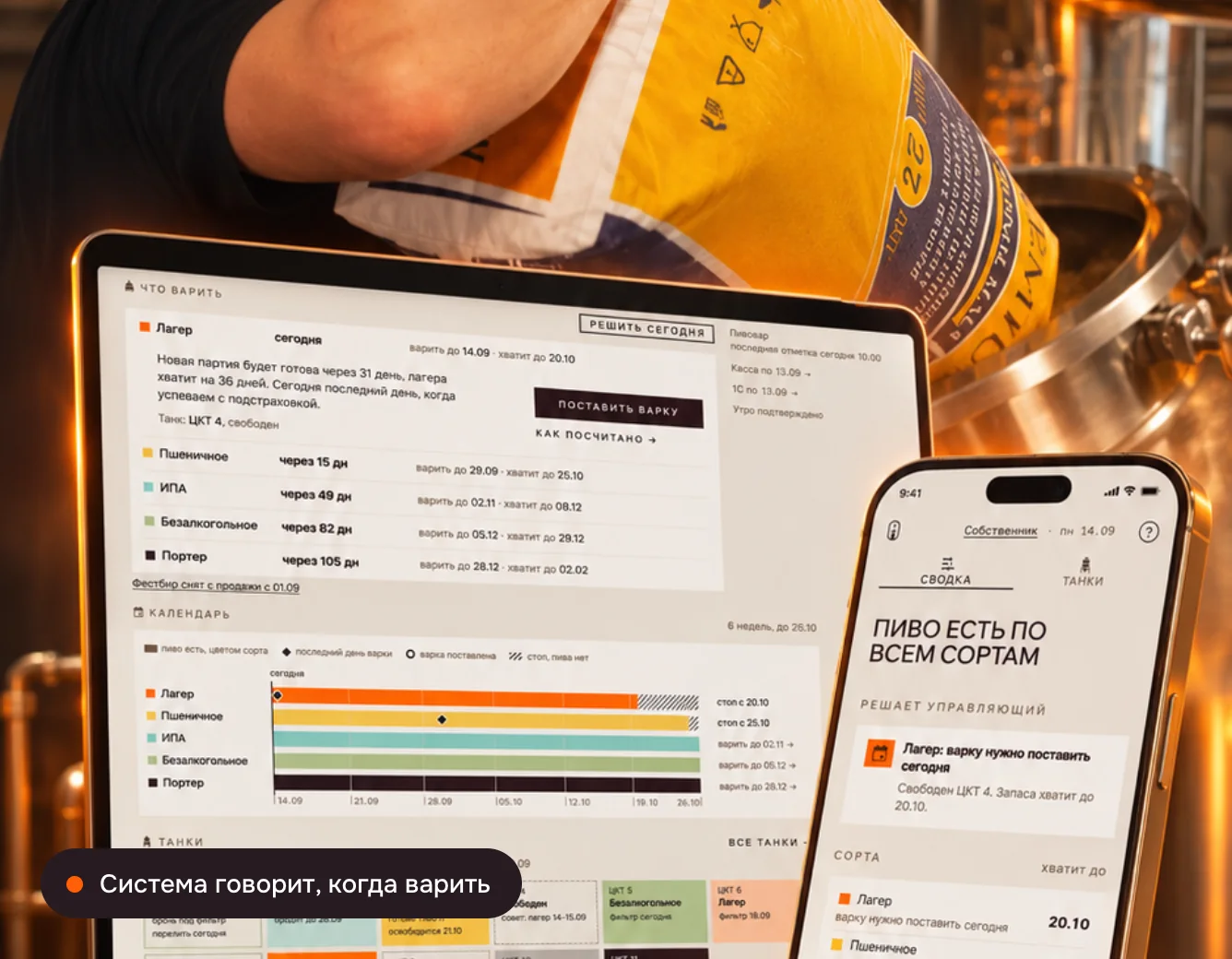
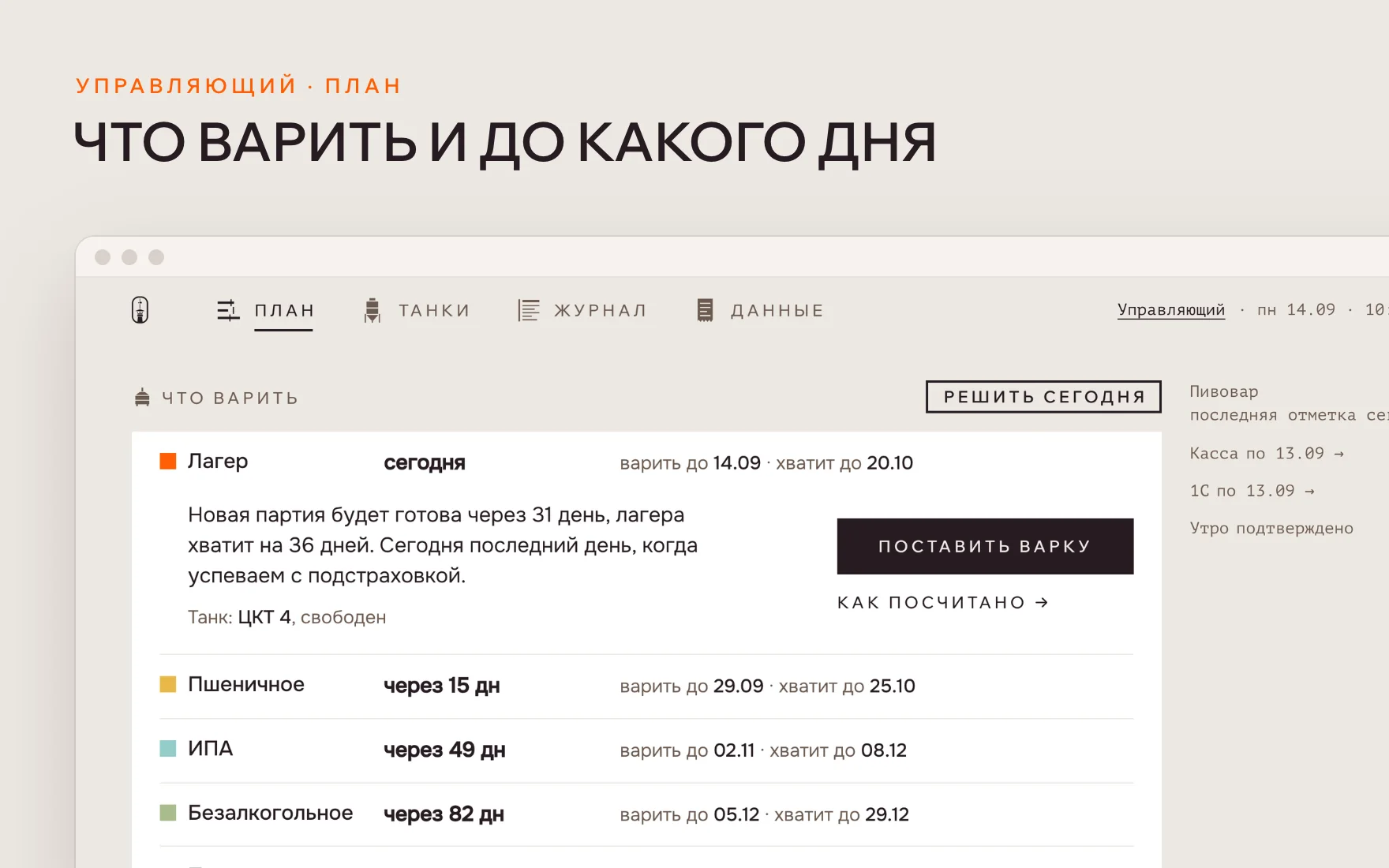
Every morning the system pulls sales and shipments and counts how much lager is in the tanks and serving tanks and how much goes out per day. The manager sees a line: «Lager: brew today, tank 4 is free». They schedule the brew, and the brewer gets a task.
Why it's harder than a spreadsheet
Lager matures in the tank for a month after brewing. So the system counts stock ahead and shows the last day you can still brew with a safety margin.
Brew too much and there's no room for the style you need. Along with the brew day the system picks a free tank and shows which ones free up this week.
No neural networks inside, only rules and plain arithmetic. Any number opens up: beer in tanks and serving tanks, daily outflow and how many days it lasts.
Inside
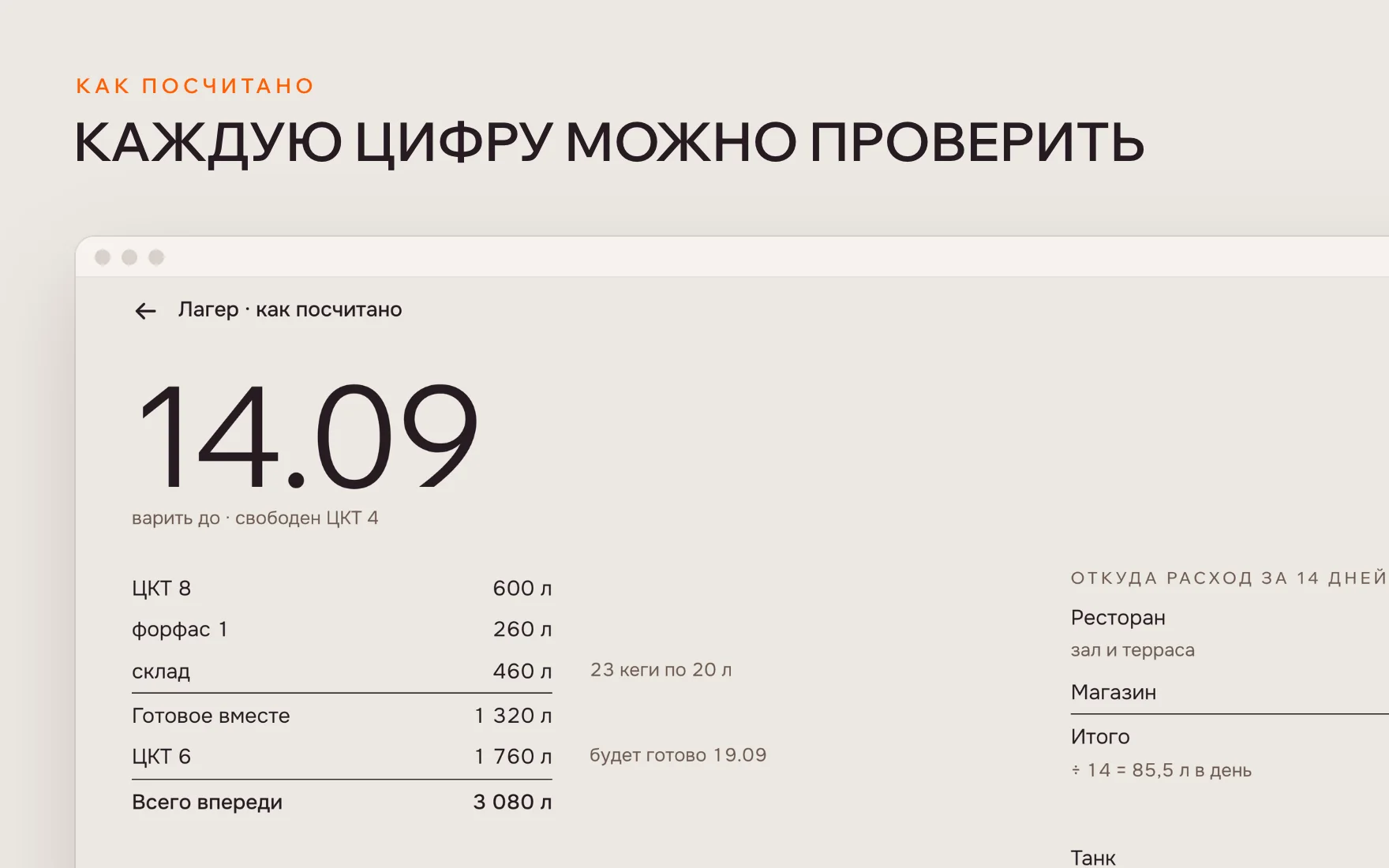
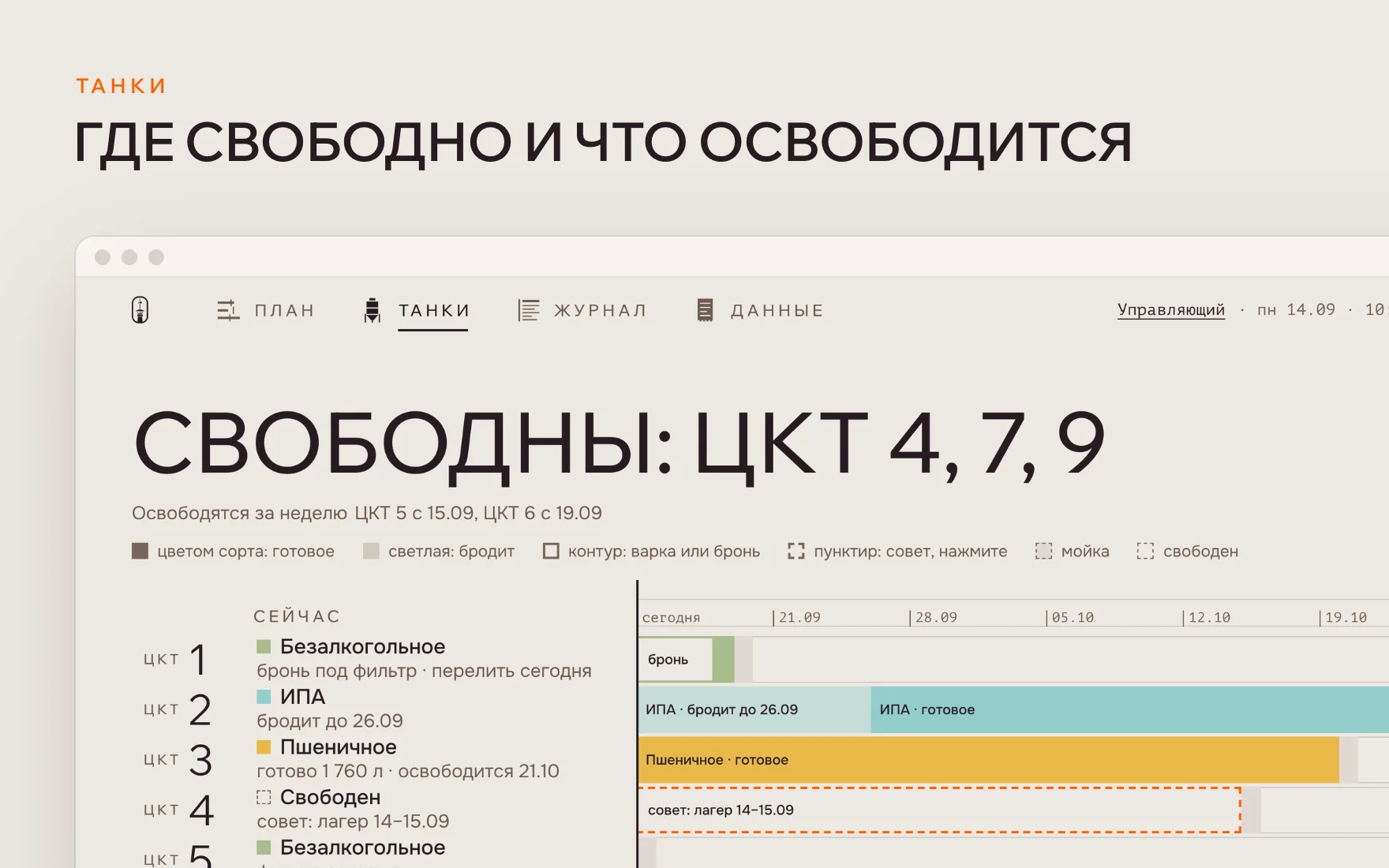
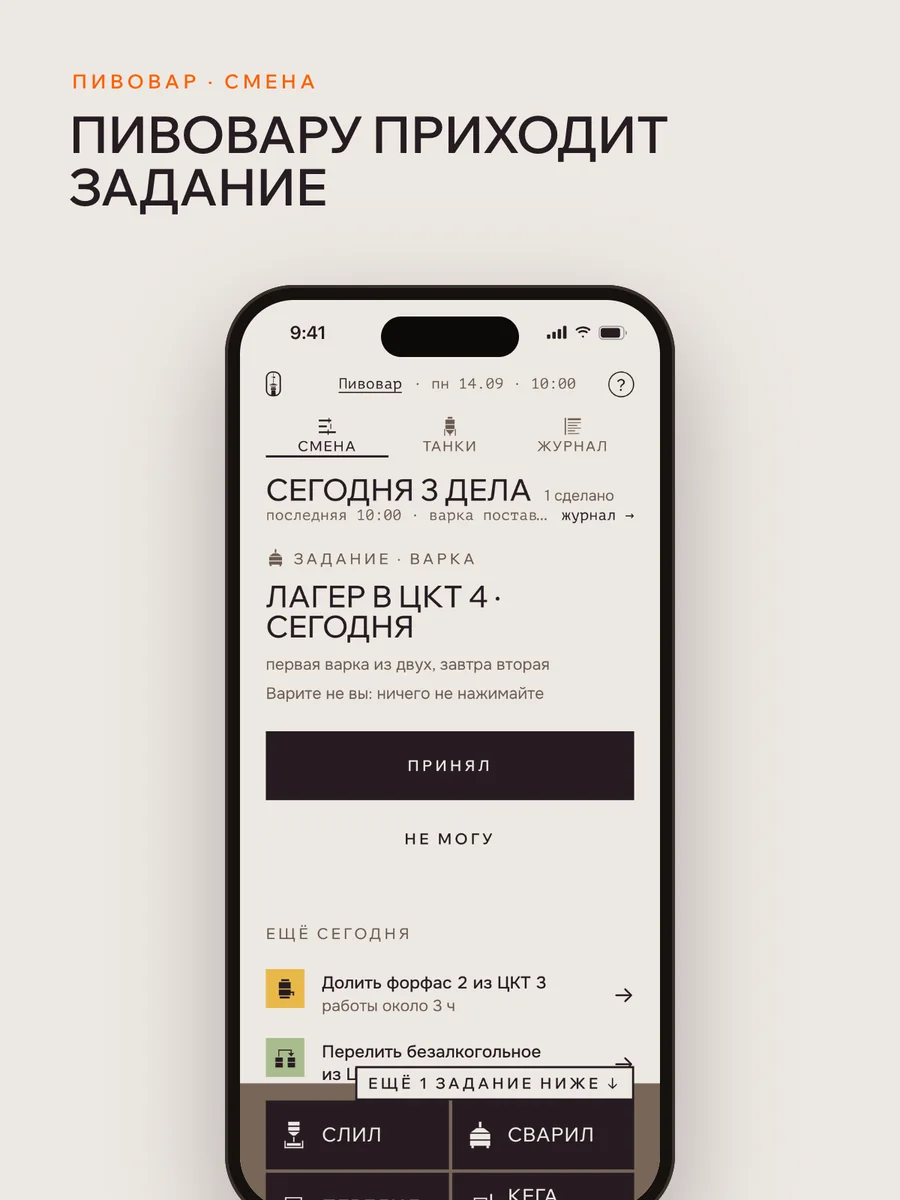
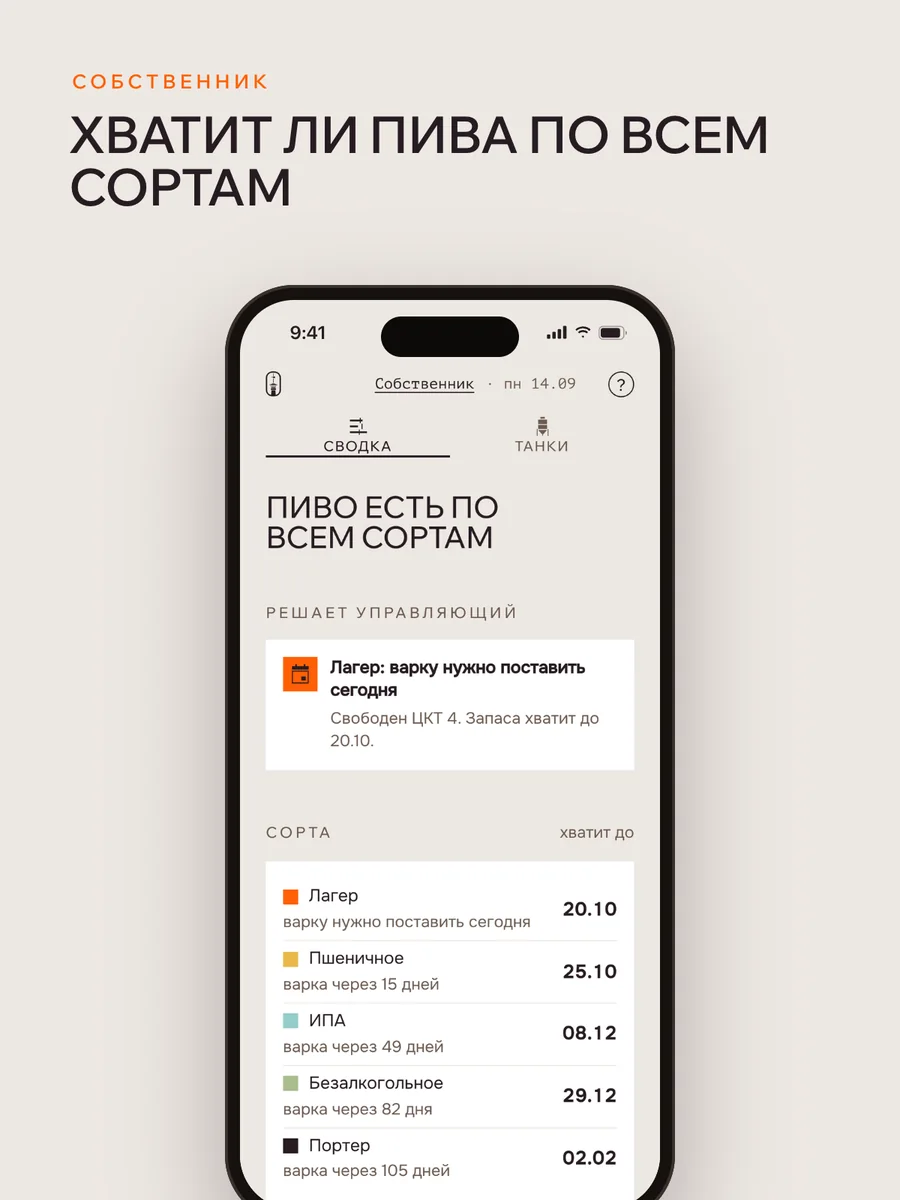
Sales from the till and shipments from 1C arrive every morning.
Which beer runs out where and the last day to brew it.
What to decide today, free tanks and a «Schedule brew» button.
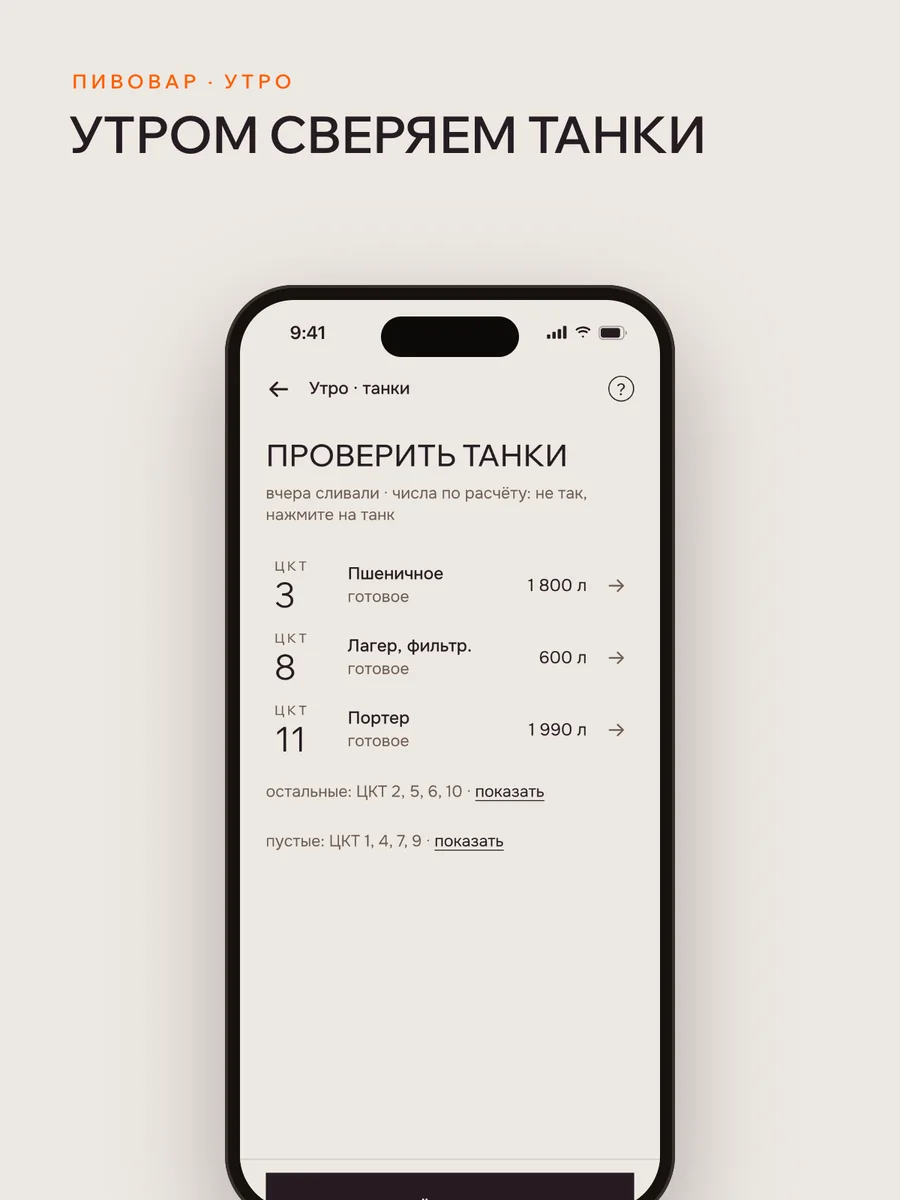
Shift tasks, transfer marks and a morning tank check.
One screen: is there enough beer of every style.
Their colours, fonts and logo, so the system looks like their menu.
How the project went
Just over a month from the first brewhouse walkthrough to the pilot.
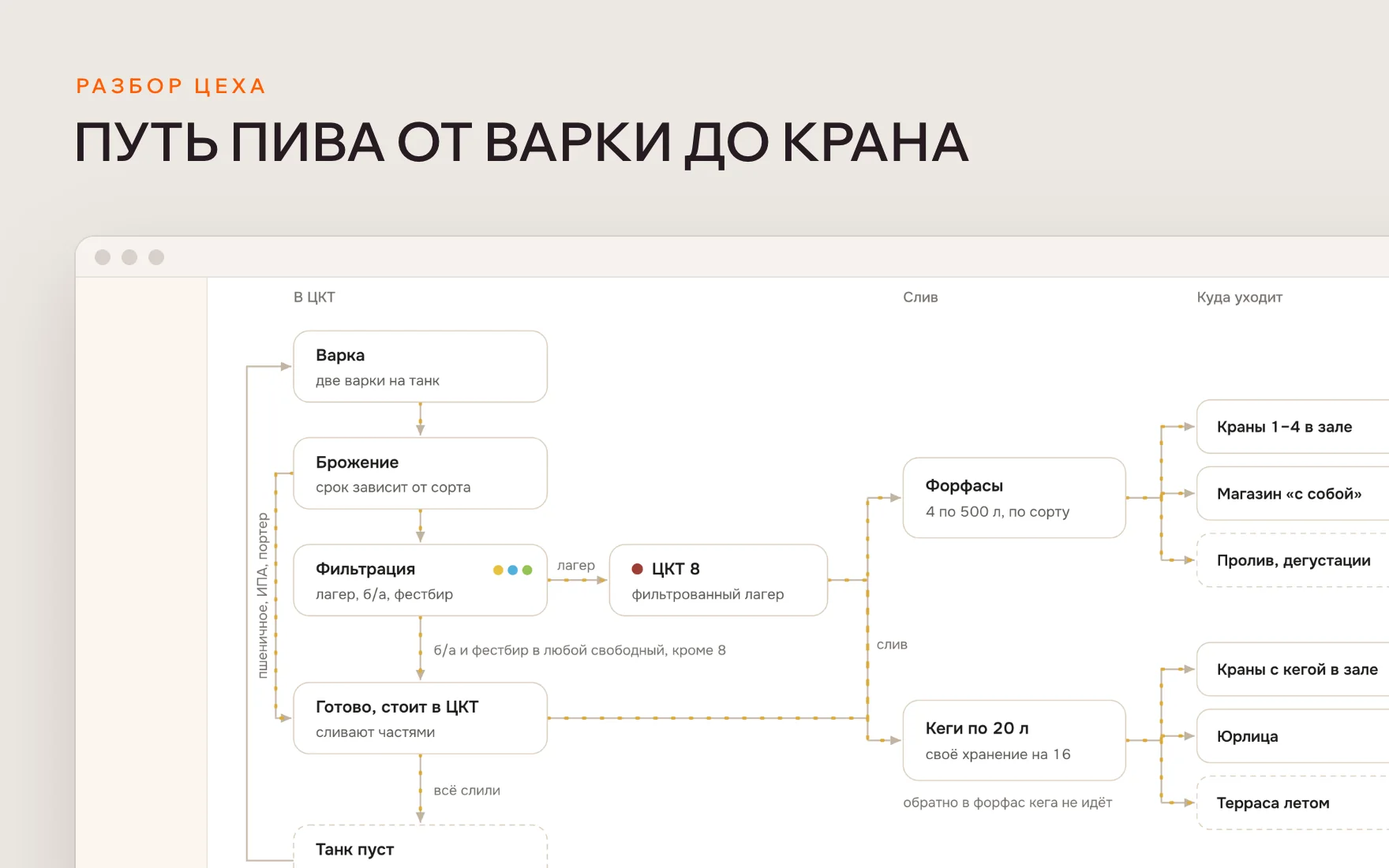
We traced each batch: brewing, fermentation, filtering, serving tank, tap. We wrote down who marks what and where, and gave the team a separate page to check it.
The calculation follows brewhouse rules: how long each style matures, litres per batch, which tank is for what. Screens follow the brand book; each role got a training video.
Since November 2 the system runs in the brewhouse. The spreadsheet is still kept in parallel, and every morning the system checks itself against it. People make the decisions.